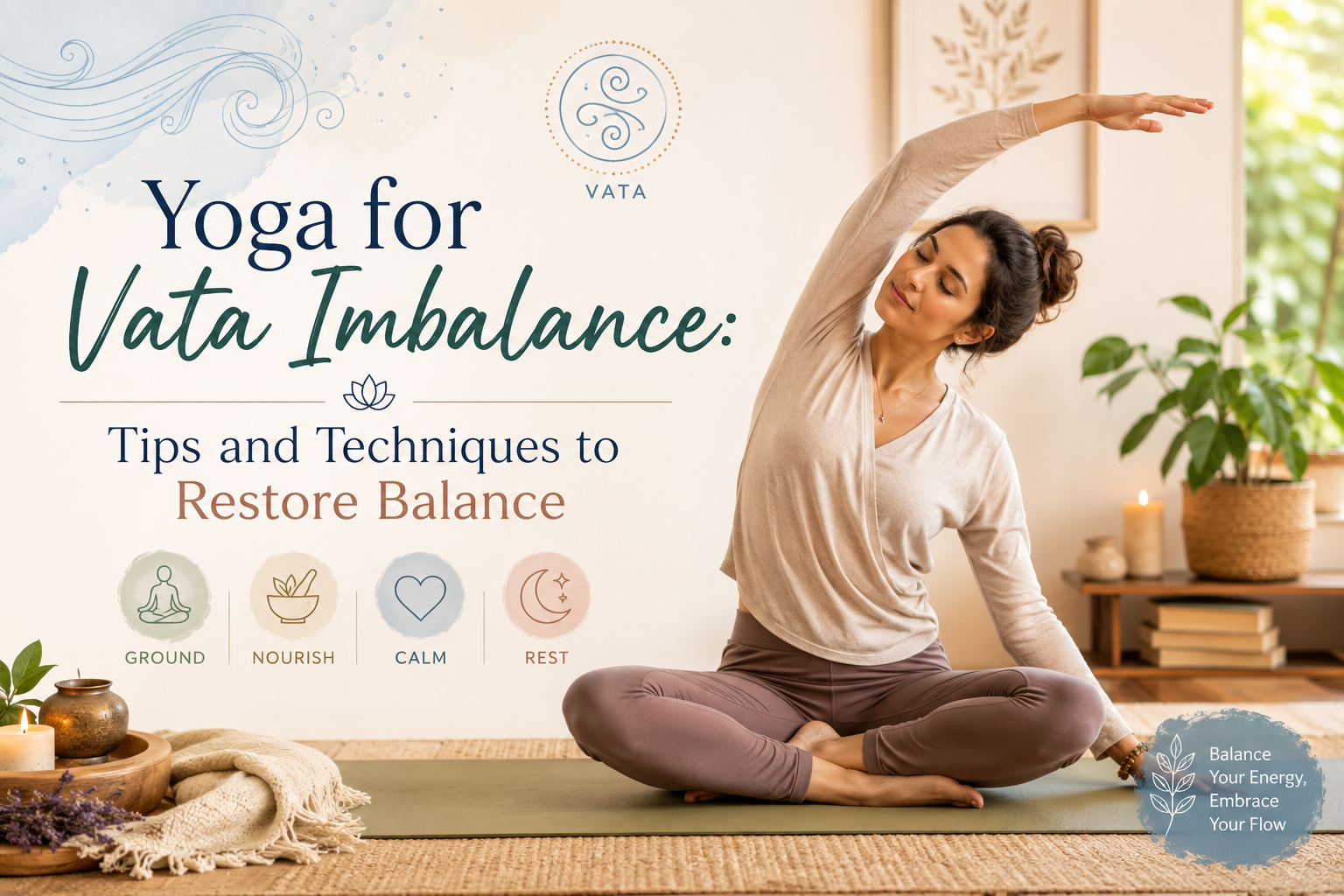
Yoga for Vata Imbalance: Tips and Techniques to Restore Balance
In Ayurveda, the ancient Indian system of medicine, Vata dosha is one of the three fundamental energies that govern our physical and mental well-being. When out of balance, Vata can manifest as anxiety, insomnia, digestive issues, and even skin problems. For those experiencing this imbalance, yoga can be a powerful tool for restoration and harmony. In this article, we’ll explore the world of yoga for vata dosha, providing you with practical tips and techniques to bring your Vata back into balance.
Understanding Vata Imbalance
To begin, it’s essential to understand what Vata imbalance looks like in our lives. When Vata is out of control, we might experience:
- Anxiety and fearfulness
- Difficulty sleeping or insomnia
- Digestive issues such as constipation or diarrhea
- Skin problems like eczema or acne
- Fatigue and lethargy
These symptoms can be overwhelming, but the good news is that yoga can help.
Yoga Asanas for Vata Balance
Certain yoga asanas are specifically designed to calm and soothe Vata energy. Here are a few key poses to try:
- Child’s Pose (Balasana): A gentle stretch that calms the nervous system and promotes relaxation.
- Cat-Cow Pose (Marjaryasana-Bitilasana): A soothing flow of movement that warms and relaxes the spine.
- Seated Forward Fold (Paschimottanasana): A calming pose that stretches the entire back side of the body, from head to heels.
In addition to these asanas, consider incorporating gentle twists and hip openers into your practice. These will help to calm Vata energy in the lower abdomen and pelvis.
Tips for Practicing Yoga for Vata
When practicing yoga for Vata imbalance, keep the following tips in mind:
- Keep it slow: Avoid fast-paced or dynamic movements that can exacerbate Vata.
- Focus on breathing: Practice deep, slow breaths to calm the nervous system and promote relaxation.
- Use gentle props: Support your body with blocks, blankets, or straps to avoid putting unnecessary strain on joints.
Breathing Techniques for Vata Balance
Breathwork is a powerful tool for balancing Vata energy. Try these techniques:
- Alternate Nostril Breathing (Nadi Shodhana): A calming practice that balances the left and right hemispheres of the brain.
- Bellows Breath (Bhastrika Pranayama): A energizing breathing technique that helps to warm and stimulate Vata energy.
Lifestyle Tips for Managing Vata
In addition to yoga, there are several lifestyle changes you can make to support your body’s natural balance:
- Eat nourishing foods: Focus on warm, cooked meals that are easy to digest.
- Stay hydrated: Drink plenty of water throughout the day to keep fluids balanced.
- Establish a routine: Create a daily schedule that includes time for rest and relaxation.
FAQs
What is Vata dosha?
In Ayurveda, Vata dosha refers to one of the three fundamental energies (along with Pitta and Kapha) that govern our physical and mental well-being. When out of balance, Vata can manifest as anxiety, insomnia, digestive issues, and more.
Can I practice yoga for Vata imbalance if I have other health conditions?
While yoga is generally safe, it’s essential to consult with a healthcare professional or certified yoga therapist before beginning any new practice, especially if you have pre-existing health conditions.
How often should I practice yoga for Vata balance?
Aim to practice at least 2-3 times per week, ideally in the morning or early afternoon. Remember to listen to your body and take breaks as needed.
Can yoga alone cure Vata imbalance?
While yoga is a powerful tool for balancing Vata energy, it’s just one part of maintaining overall well-being. Combine yoga with a balanced diet, regular exercise, and sufficient rest to support your body’s natural balance.
As we conclude this exploration of yoga for vata dosha, remember that balance is a journey – not a destination. By incorporating gentle yoga practices, breathing techniques, and lifestyle changes into your daily routine, you can restore harmony to your Vata energy and live a more balanced, vibrant life.
theyogi
Therapeutic Yoga Practitioner