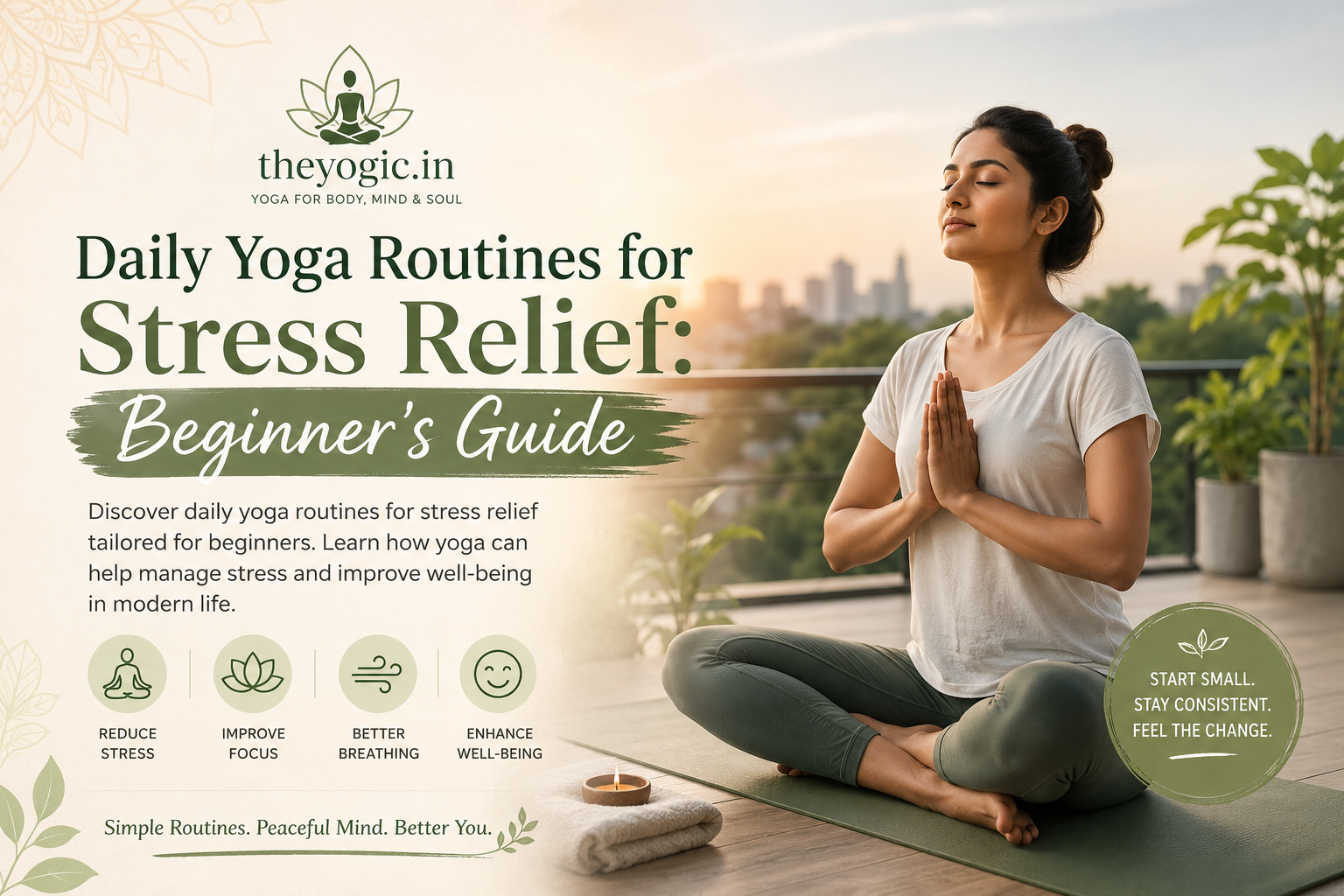
The Power of Yoga for Stress Relief in Modern Life
In today’s fast-paced world, stress has become an inevitable part of daily life, especially for those juggling work, family, and personal responsibilities. For many Indians, the pressures of urban living, lifestyle disorders, and emotional turbulence can take a toll on mental and physical health. Yet, there’s a timeless solution rooted in tradition: yoga for stress relief. This ancient practice, deeply embedded in Indian culture, offers a holistic approach to managing stress by harmonizing the mind, body, and spirit. Whether you’re a busy professional, a student, or someone seeking balance, incorporating a daily yoga routine can transform your well-being. This beginner’s guide will walk you through practical routines, tips, and insights to help you start your journey toward stress-free living.
Understanding Stress and Yoga’s Role in Healing
Stress is not just a temporary inconvenience—it’s a chronic condition that can lead to anxiety, insomnia, and even lifestyle disorders like hypertension or digestive issues. In Ayurveda, stress is linked to an imbalance of the vata dosha, which governs movement and can cause restlessness and fatigue. Yoga addresses this by calming the nervous system through mindful movement, breathwork, and meditation.
For Indian readers, yoga is more than exercise—it’s a way of life. Practices like pranayama (breath control) and asanas (postures) help regulate the autonomic nervous system, reducing cortisol levels and promoting emotional resilience. Research also shows that regular yoga practice can improve sleep quality, boost mood, and enhance focus—essential for managing the demands of modern life.
Daily Yoga Routines for Stress Relief: A Beginner’s Guide
Creating a consistent yoga routine is key to reaping its benefits. Here are three simple routines tailored to different times of the day, each designed to ease stress and rejuvenate the body.
Morning: Awaken Your Body and Mind
Start your day with a gentle sequence to energize your body and set a calm tone.
- Child’s Pose (Balasana) – 1–2 minutes to stretch the back and relax the mind.
- Downward Dog (Adho Mukha Svanasana) – 3 minutes to awaken the spine and improve circulation.
- Cat-Cow Stretch (Marjaryasana-Bitilasana) – 5 minutes to release tension in the shoulders and neck.
- Seated Forward Fold (Paschimottanasana) – 2 minutes to calm the nervous system.
Finish with Alternate Nostril Breathing (Nadi Shodhana) for 2–3 minutes to balance the mind.
Midday: Reset and Recharge
If stress creeps in during the workday, a short midday practice can restore focus.
- Standing Forward Fold (Uttanasana) – 1 minute to relieve tension in the back and hamstrings.
- Legs-Up-the-Wall Pose (Viparita Karani) – 5 minutes to calm the nervous system and improve circulation.
- Deep Belly Breathing – 3 minutes to oxygenate the body and reduce anxiety.
Evening: Wind Down and Relax
End your day with a calming routine to unwind and prepare for sleep.
- Supine Twist (Supta Matsyendrasana) – 2 minutes to release spinal tension.
- Legs-Up-the-Wall Pose – 5–10 minutes for deep relaxation.
- Supported Forward Fold (Uttanasana) – 3 minutes to soothe the mind.
Close with Guided Meditation for 5 minutes to quiet the mind.
These routines can be adjusted based on your schedule, and even 10–15 minutes of daily practice can make a significant difference.
Tips for a Sustainable Yoga Practice
Consistency is more important than perfection. Here are practical tips to help you stay committed:
- Create a dedicated space – Even a small corner with a mat and calming music can make a difference.
- Start small – Begin with 5–10 minutes daily and gradually increase the duration.
- Use props – Blocks, straps, and bolsters can help you modify poses for comfort.
- Combine with mindfulness – Pair yoga with journaling or gratitude practices to enhance emotional well-being.
- Stay patient – Progress takes time, and every session is a step toward healing.
FAQ: Common Questions About Yoga for Stress Relief
Can I practice yoga for stress relief even if I’m not flexible?
Absolutely! Yoga is about mindfulness and breath, not flexibility. Start with gentle poses and focus on your breath.
How often should I practice yoga for stress relief?
Even 10–15 minutes daily can reduce stress. Aim for 3–5 sessions per week for noticeable benefits.
Is yoga for stress relief suitable for everyone?
Yes! Yoga can be adapted to all fitness levels and health conditions. Consult a professional if you have chronic pain or injuries.
What if I feel sore after a session?
Soreness is normal, especially when starting. Use props, rest, and stay hydrated. Avoid pushing through pain.
Can yoga help with lifestyle disorders like anxiety or insomnia?
Yes! Regular practice can improve sleep, reduce anxiety, and support overall mental health.
Embrace the Journey of Healing
Stress is a part of life, but it doesn’t have to define your well-being. By integrating yoga for stress relief into your daily routine, you’re not just managing symptoms—you’re nurturing a deeper sense of balance and resilience. Remember, every breath you take and every pose you hold is a step toward healing. Start small, stay consistent, and let the practice of yoga guide you toward a calmer, more centered life. Your journey begins today.
theyogi
Therapeutic Yoga Practitioner