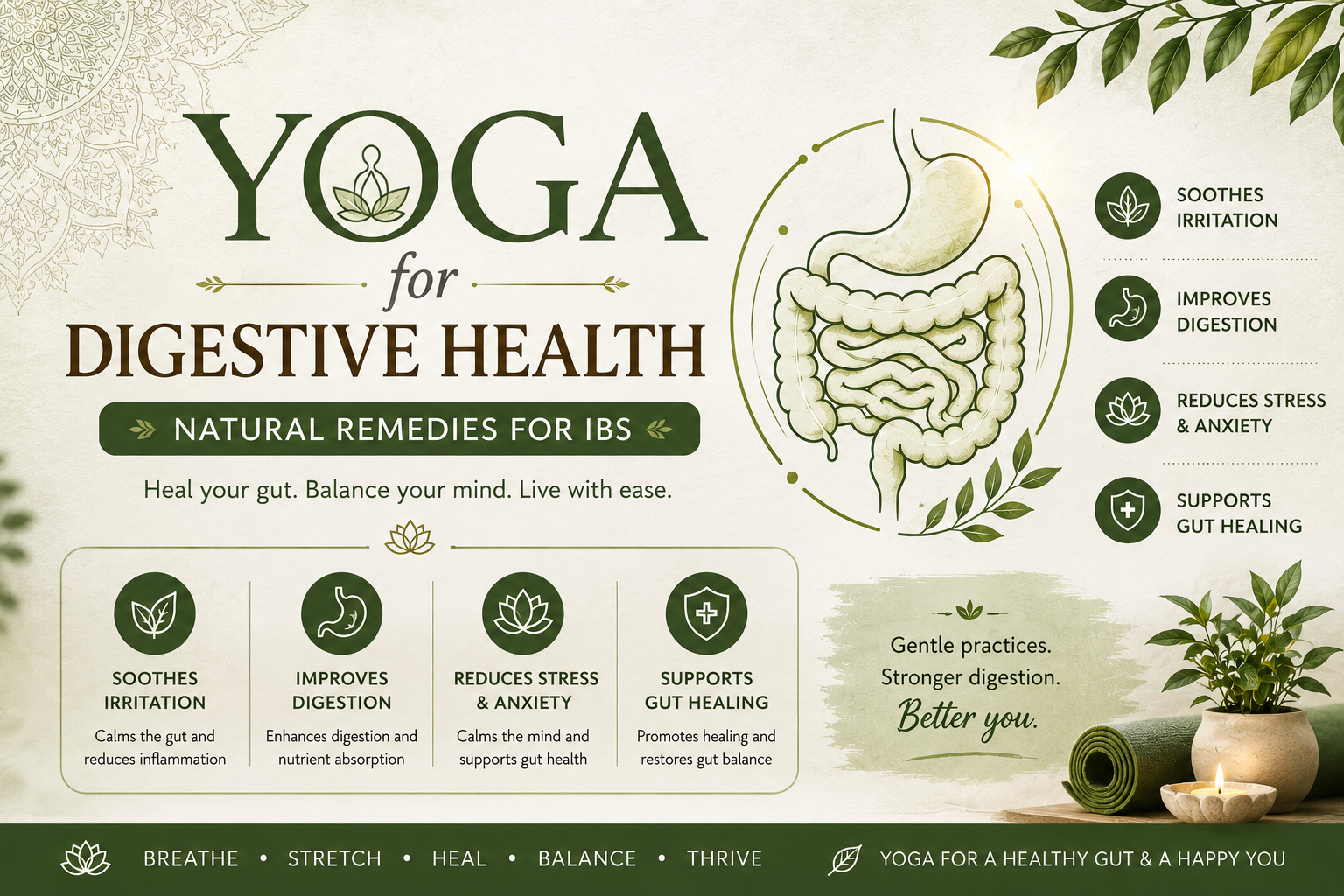
The Healing Power of Yoga for Digestive Health: A Natural Approach to IBS
In today’s fast-paced lifestyle, digestive disorders like IBS (Irritable Bowel Syndrome) are becoming increasingly common in India. While conventional treatments offer relief, many seek holistic approaches like Yoga for Digestive Health to restore balance and wellness. Yoga, with its focus on mind-body connection, offers a gentle yet powerful way to manage IBS symptoms. By integrating specific postures, breathing techniques, and lifestyle adjustments, therapeutic yoga can soothe the digestive system, reduce stress, and promote long-term wellness. This article explores how Yoga for Digestive Health can be a transformative tool for those living with IBS, offering practical insights tailored to Indian readers.
Understanding IBS and Its Impact on Digestive Health
IBS is a chronic gastrointestinal disorder characterized by symptoms like bloating, cramping, diarrhea, and constipation. It often flares up due to stress, poor diet, or imbalances in gut microbiota. In India, where dietary habits and lifestyle pressures are deeply intertwined, IBS can significantly disrupt daily life. Many individuals struggle with irregular eating patterns, processed foods, and sedentary routines, all of which can exacerbate digestive issues.
Traditional Ayurvedic texts emphasize the importance of a balanced agni (digestive fire) for optimal health. When agni is weak, toxins (ama) accumulate, leading to discomfort. Modern science now aligns with this ancient wisdom, showing that stress and inflammation play key roles in IBS. By addressing these root causes through Yoga for Digestive Health, individuals can reclaim their wellness journey without relying solely on medication.
Yoga for Digestive Health: How It Works
Yoga for Digestive Health is more than just physical exercise—it’s a practice that harmonizes the body, mind, and gut. The gentle stretching and twisting of yoga poses stimulate digestion, improve blood flow to the digestive tract, and reduce tension in the abdominal region. Breathing techniques like Pranayama also play a crucial role, calming the nervous system and reducing stress, a known trigger for IBS flare-ups.
Key Yoga Poses for Digestive Wellness
- Paschimottanasana (Seated Forward Bend): This pose massages the abdomen, aiding digestion and relieving bloating.
- Bhujangasana (Cobra Pose): Strengthens the spine and gently compresses the abdominal organs, promoting healthy digestion.
- Supta Baddha Konasana (Reclined Bound Angle Pose): Opens the hips and relieves tension, supporting gut health.
- Ardha Matsyendrasana (Half Spinal Twist): Stimulates the digestive organs and relieves gas.
- Viparita Karani (Legs-Up-the-Wall Pose): Reduces stress and encourages detoxification.
Practicing these poses regularly can create a ripple effect, improving not just digestion but also overall vitality.
Natural Remedies for IBS: Combining Yoga with Ayurveda
While Yoga for Digestive Health is a cornerstone of management, combining it with Ayurvedic practices can enhance results. Here are some natural remedies tailored to Indian lifestyles:
- Dietary Adjustments: Incorporate fiber-rich foods like whole grains, legumes, and leafy greens. Avoid spicy, oily, and processed foods.
- Herbal Support: Herbs like ginger, cumin, and turmeric can soothe the digestive tract. Peppermint oil capsules may also help alleviate cramping.
- Hydration: Drinking warm water with lemon in the morning can kickstart digestion.
- Regular Meal Times: Eating at consistent intervals helps regulate the digestive rhythm.
These practices, when paired with yoga, create a holistic approach to managing IBS.
Lifestyle Adjustments for Long-Term Wellness
Beyond yoga and diet, small lifestyle changes can make a big difference. Prioritize sleep, as fatigue weakens the immune system and disrupts digestion. Incorporate mindfulness practices like meditation to manage stress, which is a major contributor to IBS. Additionally, staying active with light exercises like walking or stretching can support gut health.
For Indian readers, integrating these habits into daily routines—whether during morning rituals or evening wind-downs—can foster a sustainable path to wellness.
FAQ: Common Questions About Yoga for Digestive Health
Can yoga cure IBS?
While yoga cannot cure IBS, it can significantly reduce symptoms and improve quality of life by managing stress and promoting digestive balance.
How often should I practice yoga for digestive health?
Aim for 20–30 minutes of yoga 3–5 times a week. Consistency is key, even if sessions are short.
Are there specific times to practice yoga for digestion?
Morning or evening sessions are ideal. Avoid eating 1–2 hours before or after practice.
Can yoga replace medical treatment for IBS?
Yoga should complement, not replace, medical advice. Consult a healthcare provider for personalized care.
What if I can’t perform certain poses?
Modify poses to suit your comfort level. Gentle movements are still beneficial for digestion.
Embrace the Journey to Wellness
Managing IBS is a journey, not a destination. By embracing Yoga for Digestive Health, you’re not just addressing symptoms—you’re nurturing a deeper connection between your body and mind. Each breath, each pose, and each mindful choice brings you closer to balance. Remember, healing is a gradual process, and every step counts. Let the wisdom of yoga guide you toward a calmer, more vibrant life. Start today, and let your body thank you.
theyogi
Therapeutic Yoga Practitioner