Namaste,
In today’s fast-paced world, yoga is often associated with physical postures, flexibility, and fitness. While these are certainly valuable aspects of the practice, yoga is much more than stretching or performing poses on a mat.
At its core, yoga is a journey inward—a practice that helps us cultivate awareness, balance, and harmony within ourselves. It is the art of being fully present in the moment, free from distractions, worries, and mental noise.
The True Meaning of Yoga
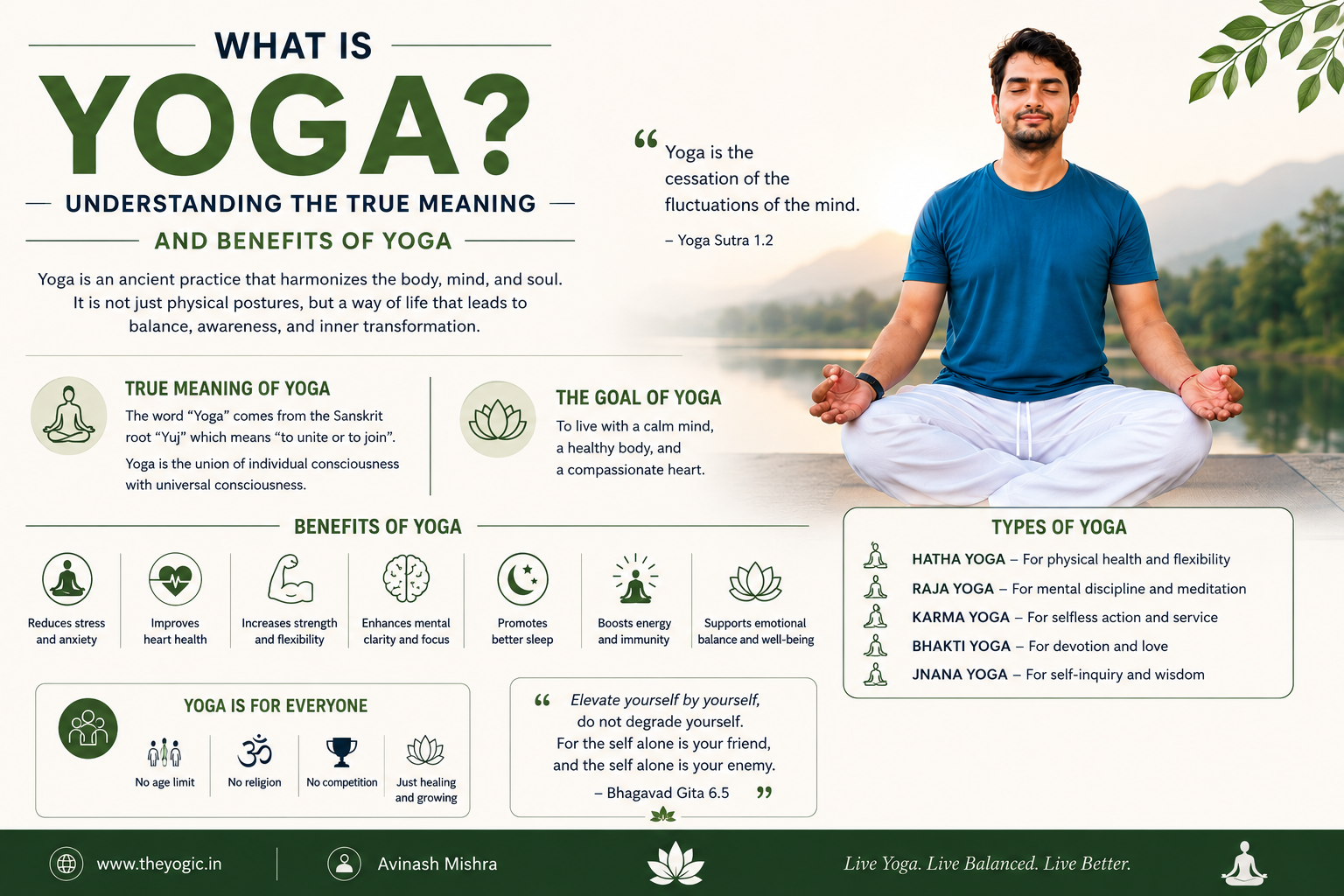
The ancient sage Patanjali defined yoga in the Yoga Sutras as:
“Yoga Chitta Vritti Nirodhah”
This profound statement means that yoga is the calming or stilling of the fluctuations of the mind.
Our minds are constantly occupied with thoughts about the past, concerns about the future, and endless streams of internal dialogue. Yoga teaches us how to quiet this mental chatter and connect with our true nature.
It is through this state of awareness and inner stillness that we begin to experience clarity, peace, and a deeper understanding of ourselves.
Yoga as a Discipline
Yoga is often described as a discipline because it requires consistency, patience, and dedicated practice.
Like any meaningful journey, the benefits of yoga unfold gradually. Through regular practice, we learn to cultivate focus, resilience, and self-awareness—not only on the mat but also in our daily lives.
As the renowned yogi and spiritual teacher Swami Kriyananda beautifully expressed:
“When we cultivate inner calmness, solutions often arise naturally to challenges that once seemed overwhelming.”
This ability to remain centered amidst life’s uncertainties is one of yoga’s greatest gifts.
Yoga Is More Than Flexibility
One of the biggest misconceptions about yoga is that it is only about becoming more flexible.
While flexibility certainly improves with practice, yoga also develops strength, endurance, balance, coordination, and body awareness.
Many yoga postures require practitioners to support their body weight, engage multiple muscle groups, and maintain stability for extended periods.
Physical Benefits of Yoga
Regular yoga practice can help:
- Improve flexibility and mobility
- Build functional strength
- Enhance posture and alignment
- Increase balance and coordination
- Support joint health
- Improve circulation
- Boost energy levels
- Strengthen the immune system
The combination of strength and flexibility creates a balanced and resilient body capable of handling the demands of everyday life.
The Mind-Body Connection
One of yoga’s most powerful qualities is its ability to unite the mind and body.
Through conscious movement and mindful breathing, practitioners develop a deeper awareness of how their thoughts, emotions, and physical sensations are interconnected.
This awareness encourages a healthier relationship with ourselves and helps us respond more skillfully to life’s challenges.
Rather than operating on autopilot, yoga teaches us to become present and intentional in our actions.
Yoga and Mental Well-Being
In addition to its physical benefits, yoga offers profound support for mental and emotional health.
As the mind becomes quieter, many practitioners experience:
- Reduced stress and anxiety
- Improved focus and concentration
- Greater emotional resilience
- Enhanced self-awareness
- Better sleep quality
- Increased feelings of calm and contentment
The breathing techniques, meditation practices, and mindfulness exercises incorporated into yoga help regulate the nervous system and create a sense of inner balance.
In a world filled with constant stimulation and distractions, these benefits have become increasingly valuable.
Yoga as a Tool for Healing
Yoga has been embraced worldwide as a complementary practice for supporting overall health and wellness.
Many individuals find that yoga helps them manage:
- Daily stress
- Physical tension
- Sedentary lifestyles
- Mental fatigue
- Emotional overwhelm
The gentle combination of movement, breathwork, and relaxation allows the body and mind to recover from the demands of modern living.
Yoga encourages us to slow down, listen to our bodies, and cultivate habits that support long-term well-being.
The Power of Breath
Breath is the bridge between the body and the mind.
In yoga, breathing practices known as Pranayama play an essential role in developing awareness and vitality.
Conscious breathing can:
- Improve oxygen delivery throughout the body
- Promote relaxation
- Reduce stress responses
- Enhance focus and concentration
- Support emotional balance
As practitioners become more aware of their breath, they often discover a greater ability to remain calm and centered in everyday situations.
A Path of Self-Discovery
Perhaps the greatest gift of yoga is the opportunity for self-discovery.
Yoga invites us to explore who we are beyond our roles, responsibilities, and external achievements. Through regular practice, we learn to observe our thoughts without judgment, embrace our strengths and limitations, and cultivate greater compassion toward ourselves and others.
The journey of yoga is not about perfection.
It is about growth.
It is about becoming more aware, more balanced, and more connected to the present moment.
Final Thoughts
Yoga is far more than a physical exercise routine. It is a comprehensive system for nurturing the body, calming the mind, and awakening the spirit.
Whether your goal is improved fitness, stress management, emotional well-being, or spiritual growth, yoga offers a path that can enrich every aspect of life.
The beauty of yoga lies in its accessibility. Regardless of age, experience, or fitness level, anyone can begin the journey and experience its transformative benefits.
When practiced consistently, yoga becomes more than something you do—it becomes a way of living with greater awareness, balance, and inner peace.
With gratitude,
Avinash Mishra
Founder & Yoga Instructor
The Yogic