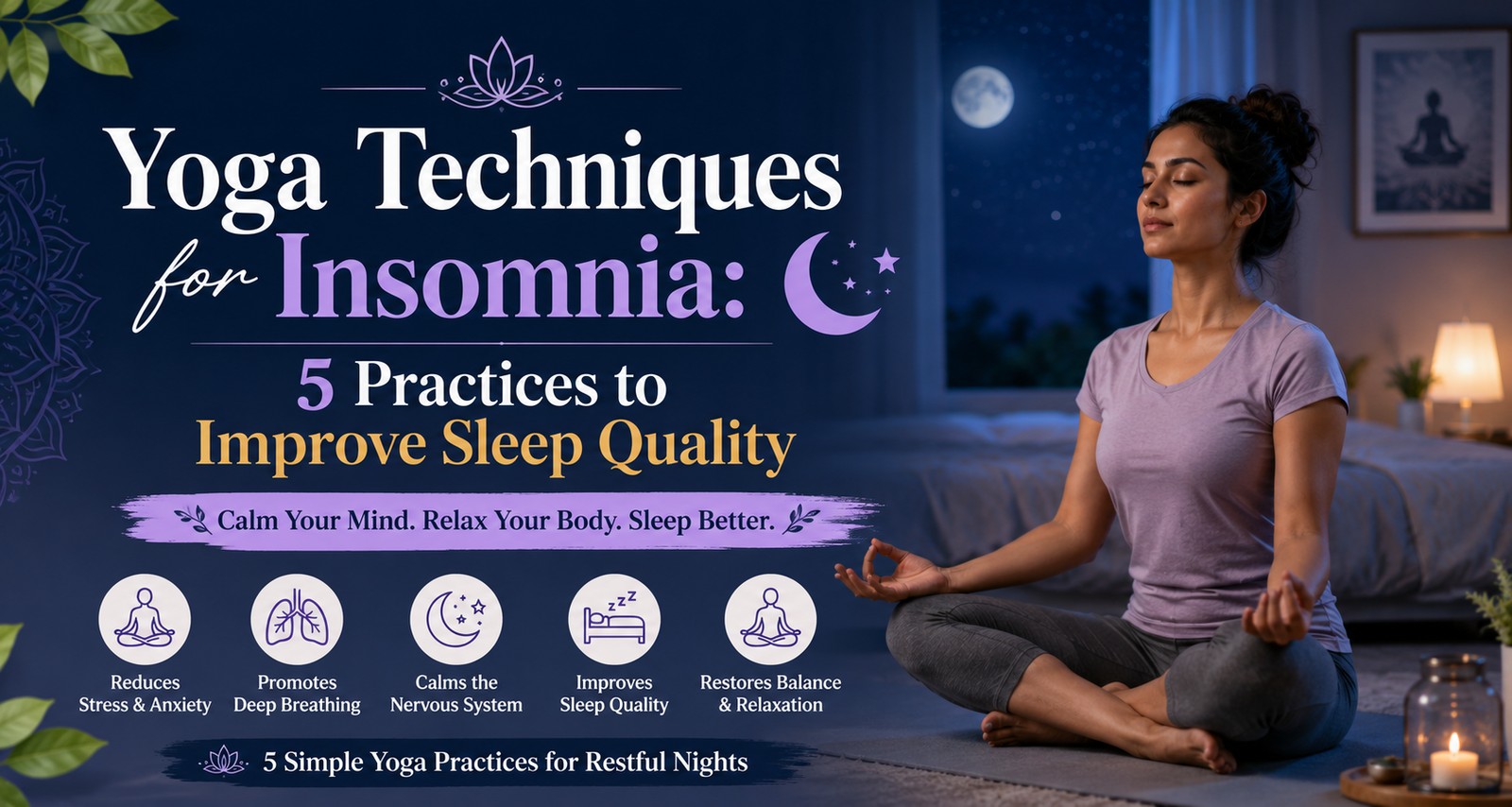
The Science of Serenity: Yoga Techniques for Insomnia
In the fast-paced rhythm of modern life, insomnia has become a common companion for many Indians, often stemming from stress, anxiety, or lifestyle imbalances. Whether it’s the pressure of work, family responsibilities, or the glow of a smartphone late at night, disrupted sleep can leave us feeling exhausted and disconnected from our well-being. But what if there’s a natural, time-honored solution rooted in ancient wisdom? Yoga, particularly therapeutic yoga for insomnia, offers a holistic approach to restoring restful sleep. By combining breathwork, mindful movement, and lifestyle adjustments, these practices can help you reclaim your nights and awaken refreshed. Let’s explore five yoga techniques that can transform your sleep quality and bring harmony to your mind and body.
1. Breathing Techniques to Calm the Mind
Breath is the bridge between the body and mind, and mastering your breath can be a powerful tool for overcoming insomnia. In yoga for insomnia, pranayama (breath control) is often the first step toward relaxation. One of the most effective techniques is Nadi Shodhana (Alternate Nostril Breathing), which balances the nervous system and quiets mental chatter. To practice:
- Sit comfortably with your spine straight.
- Use your right thumb to close your right nostril.
- Inhale slowly through your left nostril.
- Close your left nostril with your ring finger and exhale through your right nostril.
- Repeat for 5–10 rounds.
This practice activates the parasympathetic nervous system, reducing cortisol levels and promoting a state of calm. Another useful technique is Kapalabhati (Skull-Shining Breath), which energizes the body and clears mental fog. However, it’s best practiced in the morning to avoid overstimulation before bedtime.
The Power of Slow, Deep Breathing
Incorporate diaphragmatic breathing into your routine. Sit or lie down, place one hand on your chest and the other on your abdomen. Inhale deeply through your nose, allowing your abdomen to rise, and exhale slowly through your mouth. This technique increases oxygen flow, reduces anxiety, and signals the body to transition into relaxation mode.
2. Yoga Postures for Restorative Sleep
Physical stillness is essential for mental peace, and certain yoga postures can prepare the body for sleep by releasing tension and calming the nervous system.
Legs-Up-The-Wall (Viparita Karani)
This restorative pose is a gentle inversion that promotes circulation and relieves stress. To practice:
- Lie on your back with your legs elevated against a wall.
- Let your arms relax by your sides or hold them overhead.
- Stay in this position for 5–10 minutes, focusing on your breath.
This pose helps drain excess fluids from the legs, reduces swelling, and encourages relaxation.
Child’s Pose (Balasana)
A simple yet deeply soothing posture, Child’s Pose allows the body to sink into stillness. To practice:
- Kneel on the floor, then sit back on your heels.
- Stretch your arms forward and lower your forehead to the ground.
- Breathe deeply and let your body release any tension.
This pose calms the mind, relieves back pain, and prepares the body for sleep.
Forward Fold (Uttanasana)
To unwind after a long day, try a gentle forward fold. Stand with your feet hip-width apart, then slowly bend forward, letting your head hang heavy. This pose stretches the spine, relieves tension in the neck, and promotes a sense of calm.
3. A Daily Yoga Routine for Better Sleep
Consistency is key to reaping the benefits of yoga for insomnia. Here’s a simple daily routine to integrate into your lifestyle:
- Morning Practice: Begin your day with 10 minutes of pranayama and gentle stretching to set a calm tone.
- Evening Practice: Dedicate 15–20 minutes to restorative yoga poses and breathing exercises. Avoid vigorous movements to prevent overstimulation.
- Mindfulness: Incorporate 5 minutes of meditation or visualization to quiet the mind before bed.
- Digital Detox: Limit screen time at least an hour before sleep to reduce blue light exposure, which disrupts melatonin production.
By making yoga a regular part of your routine, you’ll gradually improve your sleep quality and create a deeper connection between your body and mind.
FAQ: Common Questions About Yoga for Insomnia
How long does it take to see results from yoga for insomnia?
Most people notice improvements within 2–4 weeks of consistent practice, though individual results may vary.
Can yoga replace medication for insomnia?
While yoga can be a valuable complementary therapy, it’s important to consult a healthcare professional for persistent sleep issues.
Is it okay to do yoga right before bed?
Yes, gentle practices like Child’s Pose or Legs-Up-The-Wall are ideal for winding down. Avoid intense or stimulating poses.
Can yoga help with anxiety-related insomnia?
Absolutely. Techniques like Nadi Shodhana and diaphragmatic breathing directly address anxiety, making them highly effective for sleep disorders linked to stress.
Embrace the Journey to Restful Sleep
Insomnia can feel like an unending cycle, but with the right tools, you can break free from its grip. Yoga for insomnia isn’t just about falling asleep—it’s about cultivating a sense of peace that carries you through each day. By incorporating these practices into your life, you’re not only improving your sleep but also nurturing your overall well-being. Remember, every small step toward balance is a victory. So, take a deep breath, move your body, and let the ancient wisdom of yoga guide you to a restful night’s sleep. You deserve to wake up refreshed, ready to embrace the day with clarity and joy.
theyogi
Therapeutic Yoga Practitioner