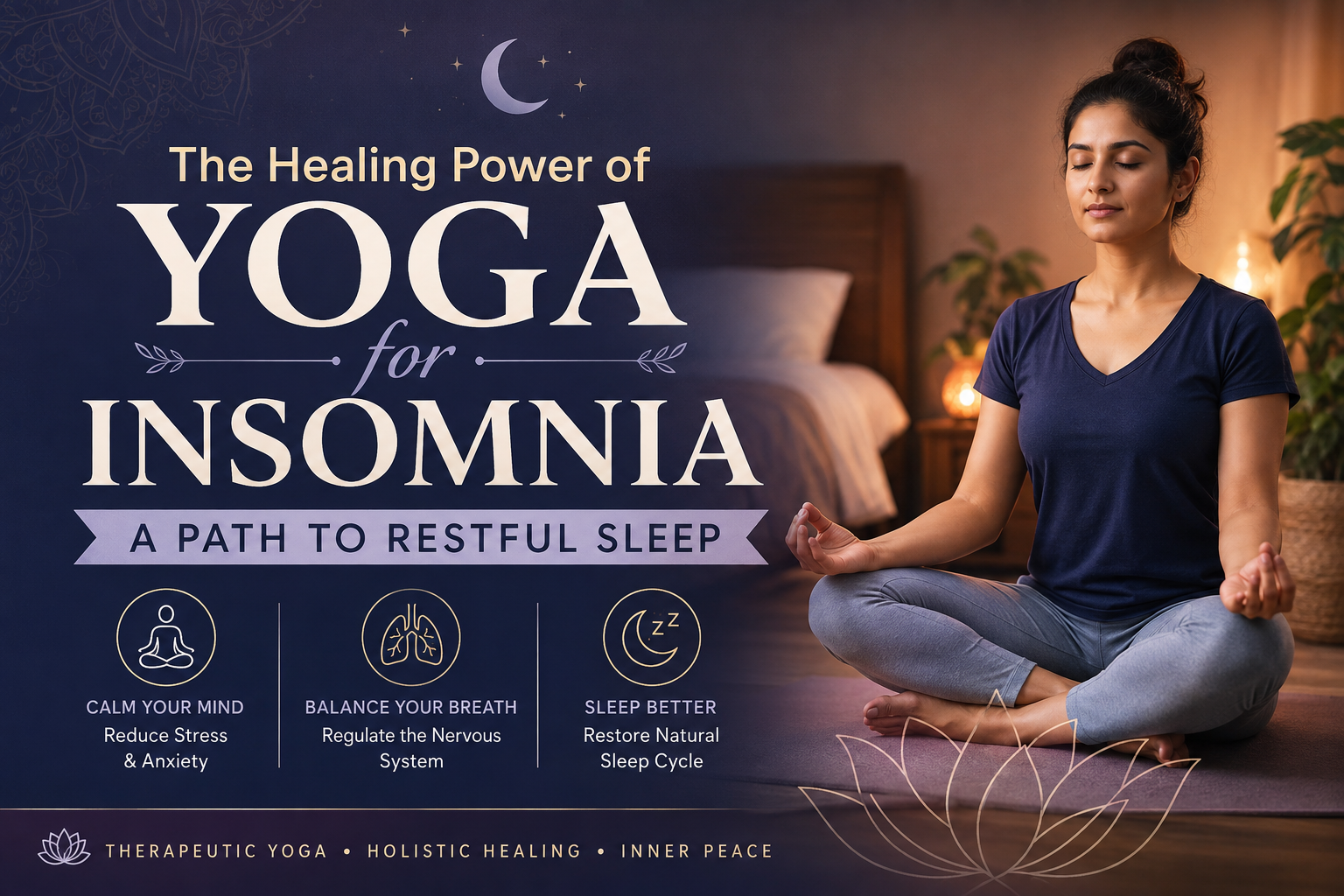
The Healing Power of Yoga for Insomnia: A Path to Restful Sleep
In a fast-paced world where stress and lifestyle disorders often disrupt sleep, insomnia has become a silent epidemic in India. From the pressures of work to the demands of family life, many struggle to find peace in their minds and bodies. Yet, ancient wisdom from yoga offers a gentle yet powerful solution. Therapeutic yoga for insomnia is not just about physical postures—it’s a holistic practice that nurtures the mind, balances the nervous system, and restores harmony to the body. This guide explores how yoga for insomnia can transform your sleep patterns and bring lasting wellness to your life.
Understanding Insomnia: A Common yet Manageable Challenge
Insomnia, the inability to fall or stay asleep, is more than a temporary inconvenience. In India, where lifestyle disorders like hypertension, diabetes, and anxiety are increasingly prevalent, insomnia often stems from a mix of stress, poor sleep hygiene, and emotional imbalances. According to Ayurvedic principles, disrupted sleep is linked to an imbalance in the vata dosha, which governs movement and governs the nervous system.
Modern lifestyles—long hours at work, screen time, and irregular routines—exacerbate this imbalance. However, therapeutic yoga for insomnia addresses the root causes by calming the mind, reducing cortisol levels, and promoting relaxation. Unlike quick fixes, yoga offers a sustainable approach to restoring sleep health.
The Science Behind Yoga for Insomnia: How It Works
Yoga for insomnia works by activating the body’s relaxation response and regulating the autonomic nervous system. Here’s how:
1. Reducing Stress and Anxiety
Yoga combines physical postures, breathing techniques, and meditation to lower stress hormones like cortisol. Studies show that regular practice can significantly reduce anxiety, a common trigger for insomnia.
2. Balancing the Nervous System
The practice of yoga for insomnia gently shifts the body from the “fight-or-flight” mode to the “rest-and-digest” state. This transition is crucial for falling asleep and maintaining deep, restorative sleep.
3. Enhancing Circadian Rhythms
Certain yoga poses and breathing exercises help regulate the body’s internal clock. For example, gentle stretching in the evening can signal the body that it’s time to wind down.
Practical Yoga Practices for Better Sleep: A Step-by-Step Guide
Incorporating yoga for insomnia into your daily routine doesn’t require hours of practice. Start with these simple yet effective techniques:
1. Gentle Stretching Poses
- Child’s Pose (Balasana): A calming posture that soothes the spine and relaxes the mind.
- Legs-Up-the-Wall Pose (Viparita Karani): Promotes blood flow and reduces restlessness.
- Seated Forward Bend (Paschimottanasana): Calms the nervous system and eases tension.
2. Breathing Techniques (Pranayama)
- 4-7-8 Breathing: Inhale for 4 seconds, hold for 7, exhale for 8. This technique activates the parasympathetic nervous system.
- Alternate Nostril Breathing (Nadi Shodhana): Balances the mind and reduces anxiety.
3. Meditation and Visualization
Spend 10 minutes before bed visualizing a peaceful scene, such as a serene garden or a quiet beach. This practice trains the mind to release racing thoughts and enter a state of calm.
Tip: Practice these techniques 1–2 hours before bedtime to avoid overstimulation.
Lifestyle Adjustments to Complement Yoga for Insomnia
While yoga for insomnia is transformative, pairing it with healthy habits can amplify its benefits. Consider these adjustments:
- Limit Screen Time: Avoid electronic devices at least an hour before bed to reduce blue light exposure.
- Create a Sleep-Friendly Environment: Keep your bedroom cool, dark, and clutter-free. Use calming scents like lavender or sandalwood.
- Stick to a Routine: Go to bed and wake up at the same time daily to regulate your circadian rhythm.
- Avoid Stimulants: Limit caffeine and heavy meals close to bedtime.
Frequently Asked Questions About Yoga for Insomnia
Frequently Asked Questions
Is yoga for insomnia suitable for everyone?
Yes, yoga for insomnia is adaptable for all ages and fitness levels. Beginners can start with gentle poses and gradually build intensity.
How long does it take to see results?
Consistency is key. Many people report improved sleep within 2–4 weeks of daily practice, though individual results may vary.
Can yoga replace medication for insomnia?
While yoga can be a valuable complementary therapy, it’s important to consult a healthcare provider for persistent sleep issues.
What if I can’t meditate?
Meditation is optional. Focus on the physical sensations of your yoga practice and the rhythm of your breath to calm the mind.
Embrace the Journey to Restful Sleep with Yoga for Insomnia
Therapeutic yoga for insomnia is more than a practice—it’s a pathway to reclaiming your well-being. By integrating gentle movements, mindful breathing, and lifestyle adjustments, you can create a sanctuary of calm in your daily life. Remember, healing is a journey, not a destination. Start small, stay consistent, and let the wisdom of yoga guide you toward restful, rejuvenating sleep. Your body and mind will thank you.
Now is the time to take the first step. Whether you’re a busy professional, a parent, or someone seeking balance, yoga for insomnia offers a gentle yet powerful way to restore harmony. Let your practice become a daily ritual of self-care, and welcome the gift of peaceful sleep.
theyogi
Therapeutic Yoga Practitioner