Namaste,
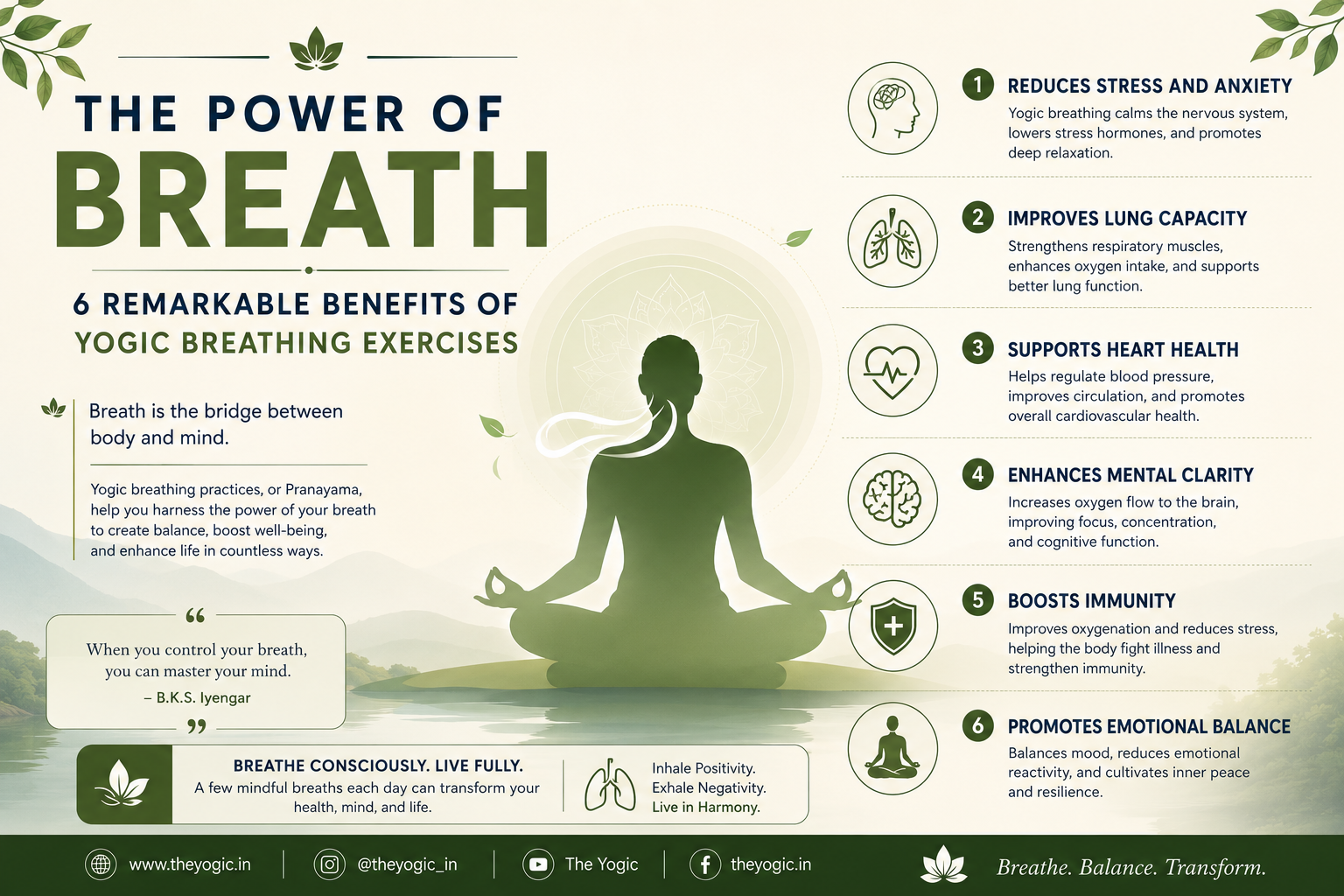
Breathing is something we do every moment of our lives, yet very few of us pay attention to how we breathe. In yoga, breath is considered the bridge between the body and the mind. Through conscious breathing practices, known as Pranayama, we can improve not only our physical health but also our mental and emotional well-being.
Modern lifestyles often lead to shallow breathing, stress, poor posture, and reduced lung capacity. Yogic breathing exercises help reverse these effects by encouraging deeper, more efficient breathing patterns that nourish the body and calm the mind.
Let’s explore some of the remarkable benefits of incorporating breathing exercises into your daily routine.
1. Promotes Healthy and Radiant Skin
Healthy skin begins from within.
Deep breathing increases oxygen delivery throughout the body, including to skin cells. Improved oxygenation and circulation help support cell regeneration and contribute to a natural, healthy glow.
Additionally, breathing exercises may help reduce stress levels. Since stress can contribute to skin concerns such as dullness and breakouts, regular pranayama practice can indirectly support healthier-looking skin.
Benefits:
- Improved blood circulation
- Better oxygen supply to skin cells
- Reduced stress-related skin issues
- Natural radiance and vitality
2. Supports Better Sleep and Relaxation
Many people struggle with restless sleep due to stress, anxiety, and an overactive mind.
Deep breathing exercises activate the body’s relaxation response by calming the nervous system and reducing mental tension.
Practicing slow, mindful breathing before bedtime can help prepare the body for restful sleep and improve overall sleep quality.
Benefits:
- Calms the mind
- Reduces stress and anxiety
- Encourages deeper relaxation
- Supports healthy sleep patterns
3. Helps the Body Eliminate Waste Efficiently
The lungs play an important role in removing carbon dioxide, one of the body’s natural waste products.
Deep breathing helps maximize lung function and encourages efficient gas exchange.
Combined with healthy lifestyle habits, pranayama can support the body’s natural detoxification processes and promote overall wellness.
Benefits:
- Improved respiratory efficiency
- Better oxygen-carbon dioxide exchange
- Enhanced sense of vitality
- Increased body awareness
4. Supports Digestive Health
Breathing deeply encourages relaxation of the nervous system, which can positively influence digestive function.
When the body is in a relaxed state, digestion often functions more effectively. Improved circulation and reduced stress can also contribute to better digestive comfort.
Many practitioners report improvements in issues related to stress-induced digestive discomfort after incorporating regular breathing exercises into their routines.
Benefits:
- Supports healthy digestion
- Encourages relaxation of digestive organs
- Helps manage stress-related digestive discomfort
- Promotes overall gut health
5. May Help Relieve Sinus Congestion
Certain breathing techniques, particularly those involving gentle vibrations such as Bhramari Pranayama (Humming Bee Breath), may help improve airflow and create soothing vibrations within the nasal passages.
These practices can support respiratory comfort and promote a feeling of openness in the nasal passages.
Benefits:
- Encourages nasal airflow
- Promotes relaxation of facial muscles
- Supports respiratory wellness
- Creates a calming effect on the mind
6. Improves Lung Capacity and Respiratory Function
One of the most significant benefits of pranayama is its positive effect on lung health.
Many people use only a fraction of their lung capacity during normal daily breathing. Yogic breathing techniques encourage fuller expansion of the lungs and greater engagement of the diaphragm.
Over time, this may help improve breathing efficiency and respiratory endurance.
Benefits:
- Strengthens breathing muscles
- Encourages diaphragmatic breathing
- Improves lung expansion
- Enhances respiratory awareness
Simple Breathing Practices to Begin With
If you’re new to pranayama, consider starting with these beginner-friendly techniques:
Deep Abdominal Breathing
Slowly inhale through the nose, allowing the abdomen to expand, then exhale gently.
Anulom Vilom (Alternate Nostril Breathing)
A balancing practice that promotes calmness and mental clarity.
Bhramari Pranayama (Humming Bee Breath)
Produces a gentle humming sound that helps relax the nervous system.
Om Chanting
Combines breath awareness with vibration, creating a calming and meditative experience.
Final Thoughts
Breath is one of the most powerful tools we have for influencing our physical, mental, and emotional well-being.
Through regular pranayama practice, we can learn to breathe more efficiently, reduce stress, improve focus, support respiratory health, and cultivate a greater sense of inner balance.
The beauty of yogic breathing lies in its simplicity. Just a few minutes each day can help you feel calmer, more energized, and more connected to yourself.
Remember, every breath is an opportunity to slow down, become present, and nurture your well-being from within.
With gratitude,
Avinash Mishra
Founder & Yoga Instructor
The Yogic