Namaste,
High blood pressure, also known as hypertension, is one of the most common lifestyle-related health concerns worldwide. Often called the “silent killer,” it may not show obvious symptoms for years while gradually affecting vital organs such as the heart, brain, kidneys, and eyes.
The good news is that healthy lifestyle habits, including regular physical activity, stress management, proper nutrition, and yoga, can play a significant role in supporting healthy blood pressure levels.
In this article, we’ll explore what hypertension is, its common causes, potential risks, and how yoga and pranayama may help as part of a holistic wellness routine.
What Is High Blood Pressure?
Blood pressure refers to the force exerted by circulating blood against the walls of your arteries.
When this pressure remains consistently higher than normal over time, it is known as high blood pressure (hypertension).
Because hypertension often develops gradually without noticeable symptoms, many people may not realize they have it until it is detected during a medical examination.
How Is Blood Pressure Measured?
Blood pressure is measured using a device called a sphygmomanometer, commonly known as a blood pressure monitor.
A blood pressure reading consists of two numbers:
- Systolic Pressure: Pressure when the heart pumps blood.
- Diastolic Pressure: Pressure when the heart rests between beats.
A healthcare professional can determine whether your readings fall within a healthy range or require medical attention.
Regular monitoring is essential, especially for individuals with risk factors for hypertension.
Common Causes and Risk Factors
While there is no single cause of hypertension, several factors may increase the risk of developing high blood pressure.
Diabetes
People living with diabetes are at a higher risk of hypertension due to changes in blood vessels, blood sugar levels, and associated cardiovascular risk factors.
Pregnancy
Some women may develop elevated blood pressure during pregnancy. Conditions such as preeclampsia require immediate medical supervision.
Sleep Apnea
Interrupted breathing during sleep can place additional strain on the cardiovascular system and contribute to high blood pressure.
Age
As we grow older, blood vessels naturally become less flexible, which may increase blood pressure over time.
Family History
Genetics can play an important role. Having close relatives with hypertension may increase your likelihood of developing it.
Obesity and Excess Weight
Carrying excess body weight places additional demands on the heart and blood vessels.
Smoking
Smoking damages blood vessels and reduces oxygen delivery throughout the body, contributing to elevated blood pressure and cardiovascular disease.
Excessive Alcohol Consumption
Frequent heavy alcohol intake can negatively affect heart function and blood pressure regulation.
High-Sodium Diet
Diets rich in processed foods and excess salt are associated with increased blood pressure in many individuals.
High Cholesterol
Elevated cholesterol levels can contribute to narrowing and stiffening of blood vessels.
Chronic Stress
Long-term emotional and psychological stress may influence blood pressure and overall cardiovascular health.
What Happens If Hypertension Is Left Untreated?
Uncontrolled high blood pressure can increase the risk of serious health complications, including:
- Heart disease
- Heart attack
- Stroke
- Heart failure
- Kidney disease
- Vision problems
- Memory and cognitive decline
- Metabolic disorders
This is why early diagnosis and proper management are so important.
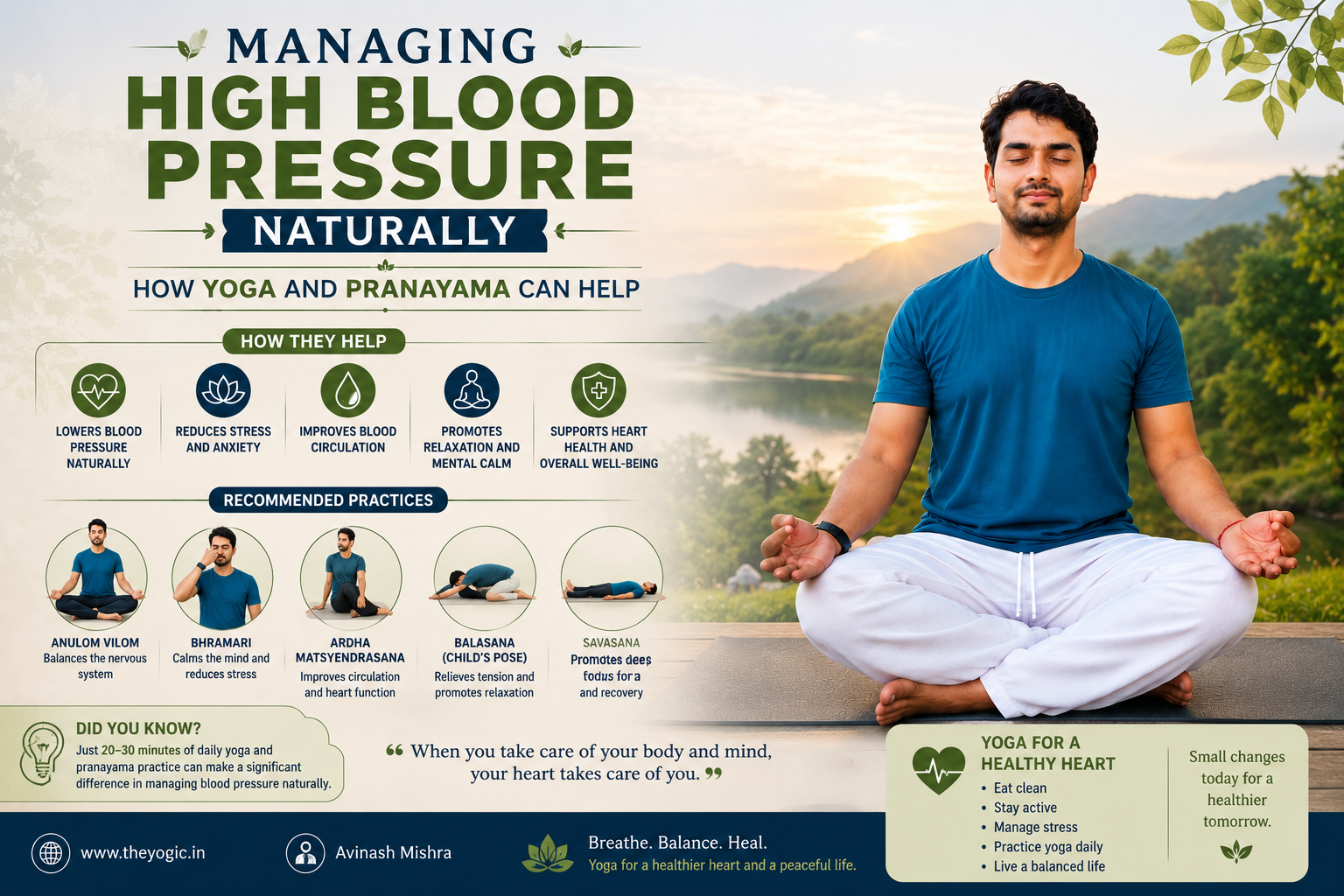
Can Yoga Help with High Blood Pressure?
Research suggests that yoga may be a valuable complementary practice for individuals managing hypertension.
Yoga is not a replacement for medical treatment or prescribed medications, but it may help support overall cardiovascular health when combined with professional medical care and healthy lifestyle habits.
Potential benefits include:
- Reduced stress and anxiety
- Improved breathing efficiency
- Better sleep quality
- Enhanced circulation
- Improved emotional well-being
- Greater relaxation and nervous system balance
Many practitioners report feeling calmer, more relaxed, and better able to manage daily stress after establishing a regular yoga practice.
How Pranayama Supports Heart Health
Pranayama, the practice of conscious breathing, is particularly beneficial for stress management.
Slow and controlled breathing exercises may help:
- Calm the nervous system
- Reduce stress responses
- Improve oxygen utilization
- Promote relaxation
- Support healthy cardiovascular function
Practices such as Anulom Vilom and Bhramari Pranayama are commonly recommended as part of a gentle wellness routine.
Can High Blood Pressure Be Cured?
In many cases, hypertension is a long-term condition that requires ongoing management.
However, lifestyle improvements can significantly improve blood pressure control and overall health.
A comprehensive approach may include:
- Regular exercise
- Healthy eating habits
- Weight management
- Stress reduction
- Adequate sleep
- Medical supervision
- Yoga and pranayama practice
The goal is not simply to lower blood pressure numbers but to improve overall quality of life and cardiovascular health.
A Simple 15-Minute Yoga and Pranayama Routine
This beginner-friendly routine focuses on gentle movement, relaxation, and breathing awareness.
Important: Consult your healthcare provider before starting any new exercise program, especially if you have hypertension or other medical conditions.
Step 1: Deep Breathing (1 Minute)
Stand comfortably and take 10 slow, deep breaths.
Focus on expanding the abdomen and relaxing the shoulders.
Step 2: Neck Movements (2 Minutes)
Slowly move your head:
- Right and left
- Up and down
Perform each movement gently and mindfully while coordinating with your breath.
Step 3: Gentle Spinal Twists (2 Minutes)
Stand with feet shoulder-width apart.
Place your hands on your waist and gently rotate your torso from side to side.
Inhale as you rotate and exhale as you return to center.
Step 4: Relaxed Resting Position (1 Minute)
Lie comfortably on a yoga mat with your knees bent and feet on the floor.
Allow your body to relax completely.
Step 5: Alternate Nostril Preparation (2 Minutes)
Practice breathing through one nostril at a time to prepare the respiratory system for pranayama.
Keep the breath slow and comfortable.
Step 6: Anulom Vilom Pranayama (5 Minutes)
Alternate breathing through the left and right nostrils in a calm and rhythmic manner.
This practice encourages balance and relaxation.
Step 7: Bhramari Pranayama (2 Minutes)
Create a gentle humming sound while exhaling.
Repeat 10 rounds.
The soothing vibration can help calm the mind and reduce mental tension.
Step 8: Om Chanting (2 Minutes)
Chant “Om” slowly and mindfully.
Allow the vibration to resonate throughout the body while maintaining relaxed breathing.
Final Thoughts
Managing high blood pressure requires a holistic approach that combines medical guidance, healthy lifestyle choices, and consistent self-care practices.
Yoga and pranayama offer a gentle yet powerful way to reduce stress, improve relaxation, and support overall cardiovascular wellness. While they should not replace professional medical treatment, they can become valuable tools on your journey toward better health.
With regular practice, patience, and proper guidance, yoga can help you cultivate greater balance, awareness, and well-being—both on and off the mat.
With gratitude,
Avinash Mishra
Founder & Yoga Instructor
The Yogic